


On this page
Law firm marketing statistics in 2026 point to a market that is bigger, more expensive, more technical and more measurable all at once.
Search visibility now stretches across Google, local map results, AI-generated answers, paid ads, review platforms, legal directories and referral traffic.
A firm can have a strong reputation and still lose cases because the phone goes unanswered, the website loads slowly, the Google Business Profile is underbuilt, or the intake process breaks before a consultation is booked.
This report brings together current law firm marketing statistics from legal industry bodies, federal labor and economic data, legal technology reports, paid media benchmarks, local SEO studies, legal consumer research and native Google documentation.
Three Stripes Digital uses this kind of data to help law firms see where growth is breaking down: visibility, lead quality, paid acquisition cost, local trust, website conversion, call handling or intake follow-up. These numbers are not vanity metrics. They show where legal marketing budgets get wasted, where qualified leads leak and where firms can build a stronger path from search to signed case.
Key Takeaways
The legal market is crowded, digital, expensive and increasingly shaped by AI. Law firms are competing with paid ads at the top of the page, local map results, review profiles, legal directories, AI-generated answers, referral networks and every other firm trying to look more credible in the same few seconds of client attention.
A firm can rank, advertise and publish consistently, but still lose revenue if its reviews look thin, its website loads slowly, its calls go unanswered or its intake team cannot explain what happens next. The firms with the strongest growth path are the firms connecting the full chain: visibility, trust, intake and measurement.
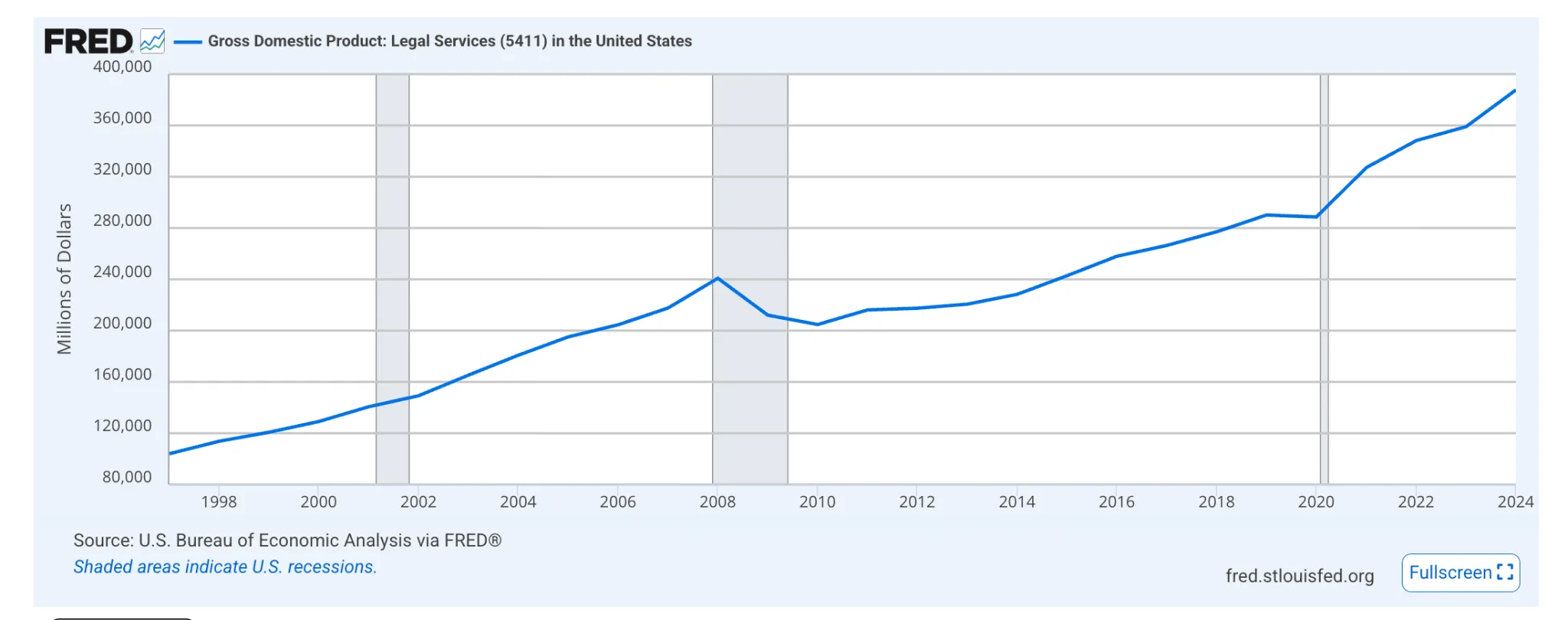
- The U.S. legal market is massive. Legal services GDP reached $387.719 billion in 2024, up from $359.005 billion in 2023, giving law firm marketing a serious market-size frame grounded in federal data, not agency hype. ( FRED/BEA, September 2025 )
- More lawyers are competing for attention. The ABA reported 1.37 million U.S. lawyers in 2025, the first significant increase since 2020. More attorneys in the market means stronger positioning, better local visibility and faster response systems carry more weight. ( ABA, 2025 )
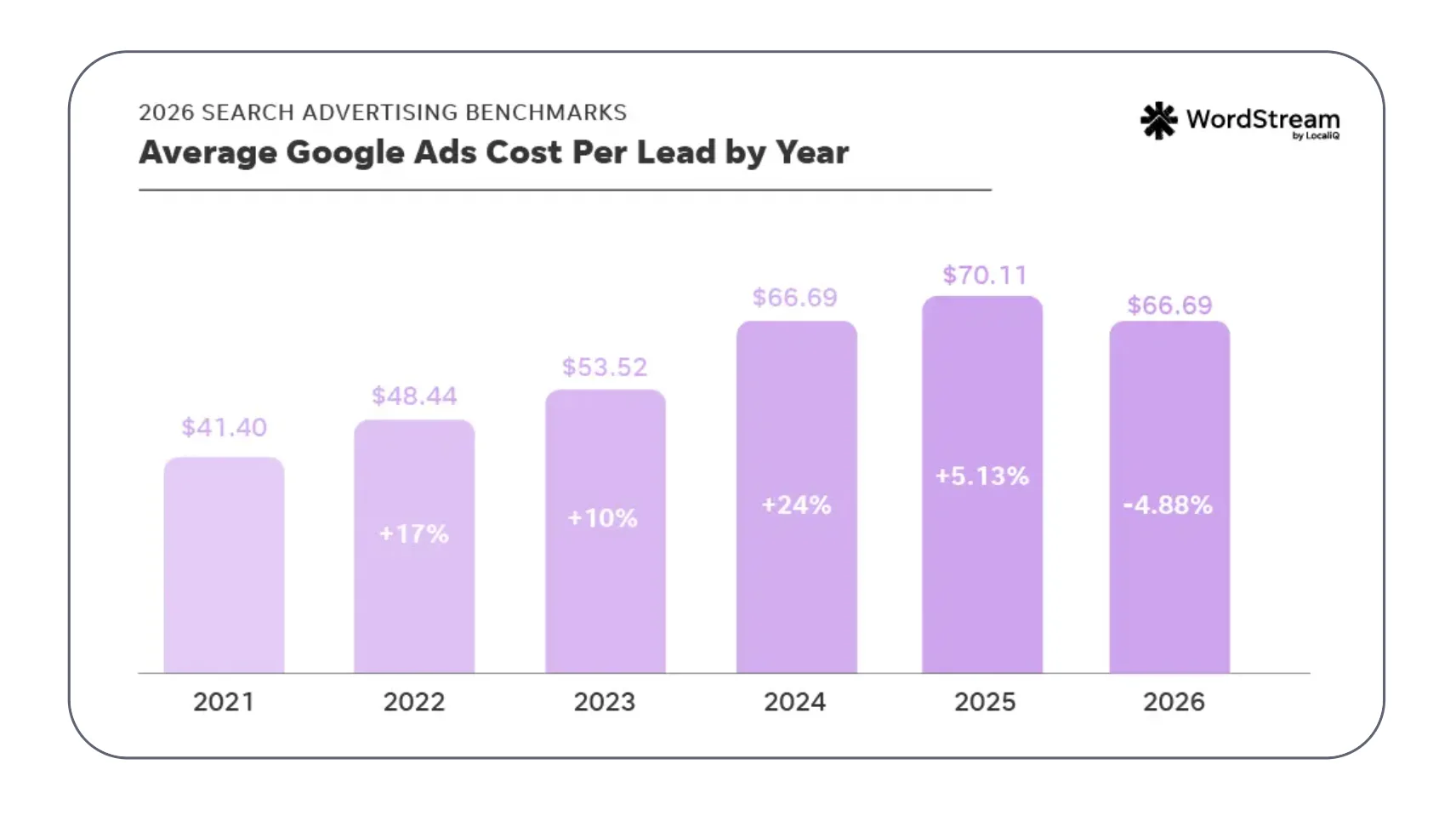
- Legal paid search is unusually expensive. Attorneys and legal services had the highest average Google and Microsoft Ads cost per lead in WordStream’s 2026 benchmarks at $131.63, with an average CPC of $9.87. Intake quality and landing page conversion are not nice-to-haves when leads cost this much. ( WordStream, May 2026 )
- AI visibility is not the same as organic ranking. Only 38% of URLs cited in Google AI Overviews also ranked in the top 10 organic results in Ahrefs’ 2026 analysis, which means law firms need to think about classic SEO and AI citation visibility together. ( Ahrefs, March 2026 )
- Local SEO still starts with the basics that decide visibility. The primary Google Business Profile category was identified as a leading local pack ranking factor in Whitespark’s 2026 local ranking research. Category accuracy is not housekeeping. It is how Google understands what the firm does. ( Whitespark, November 2025 )
The State of Law Firm Marketing
Law firm marketing is now about how easily a firm can be found, how quickly it responds, how credible it looks online and how well its systems move a potential client from search to consultation. The numbers below show a market where digital adoption, technology spend, AI usage and traditional marketing shifts are all connected. Marketing is no longer a separate business function sitting outside firm operations. It touches intake, client communication, local visibility, billing clarity and growth.
Digital Adoption and Transformation Data
- The U.S. legal services sector reached $387.719 billion in GDP in 2024, up from $359.005 billion in 2023. Legal marketing sits inside a large professional-services category where acquisition strategy has real financial weight. ( FRED/BEA, September 2025 )
- The ABA counted 1.37 million U.S. lawyers in 2025, up from 1.35 million the previous year. A bigger lawyer population does not automatically mean better access for clients; it means firms need clearer visibility, stronger differentiation and fewer intake leaks. ( ABA, 2025 )
- Lawyer employment is projected to grow 4% from 2024 to 2034, with about 31,500 openings each year on average. The category is active, but competition for qualified clients is not cooling off. ( BLS, August 2025 )
- Across legal occupations, BLS projects about 83,800 openings each year from 2024 to 2034. Firm growth depends on attorneys, support roles, operations, intake and service delivery working together. ( BLS, August 2025 )
- AI usage among legal professionals jumped from 19% in 2023 to 79% in 2024. Legal AI is no longer a fringe experiment; it is now part of how firms think about productivity, communication, research and client service. ( Clio, October 2024 )
- Professionals expect AI to save about five hours per week, or roughly 240 hours per year. That turns AI into a capacity conversation, not just a content tool conversation. ( Thomson Reuters, 2025 )
- Legal marketing is being reshaped by AI adoption and intake pressure, according to CallRail’s 2026 law firm outlook. Generating more leads does not help much if the intake process cannot capture them. ( CallRail, 2026 )
- More than half of consumers have used or would consider using AI to answer legal questions, and 28% of consumers using AI for legal questions were directed by AI to contact a lawyer. AI is now part of the client journey before the consultation ever happens. ( Clio, January 2026 )
Marketing Budget and Technology Spend
- 65% of law firms budgeted for technology in 2024, according to the ABA. For marketing, that includes websites, intake systems, analytics, CRM tools, call tracking and AI workflows that now sit inside the growth engine. ( ABA, April 2025 )
- Nearly 100 senior legal marketing and business development decision-makers were surveyed by the Legal Marketing Association and Above the Law about AI, management, client acquisition and business development strategy. That gives the article a legal-marketing leadership lens, not just a platform-data lens. ( LMA/Above the Law, June 2025 )
- Technology budgeting is not evenly distributed: 41% of solo firms budgeted for technology compared with 90% of firms with 100 or more attorneys. Smaller firms often need leaner, better-prioritized marketing systems because the resource gap is real. ( ABA, April 2025 )
- CallRail’s 2026 legal marketing outlook is based on U.S. law firm survey data and focuses on AI, channel planning and intake speed. The better budget question is not only what to spend, but what helps convert demand. ( CallRail, 2026 )
- The average annual technology spend among firms was $13,991, while solo respondents typically spent less than $3,000 per year. The spread is wide, and it changes what “marketing infrastructure” can realistically look like by firm size. ( ABA, April 2025 )
- Cross-industry marketing budgets averaged 7.7% of company revenue in 2025, according to Gartner. This is not legal-specific, but it gives law firms a useful outside reference when evaluating how much growth investment is realistic. ( Gartner, May 2025 )
Traditional vs Digital Law Firm Marketing
- 87% of law firms had a website in 2023, down from 94% in both 2021 and 2022. A website is common in legal, but the real issue is not ownership. It is performance, trust, local relevance and conversion. ( ABA, January 2024 )
- One third of law firms maintained a blog in 2023. Content marketing is still part of the legal marketing mix, but the opportunity is not publishing for the sake of publishing. It is answering the questions that lead to qualified consultations. ( ABA, January 2024 )
- Modern law firm marketing is moving toward faster intake, new channel adoption and AI-assisted workflows. The channel mix matters less than the firm’s ability to capture and convert qualified demand. ( CallRail, 2026 )
- Events were still the most common traditional marketing channel in the ABA survey, with 44% of law firms sponsoring or attending events in 2023. Offline visibility still works in the right market, especially when it supports referrals and local reputation. ( ABA, January 2024 )
Law Firm SEO, Organic Search, and AI Discovery Statistics
Legal SEO has always been competitive because the searcher usually has intent. By the time someone searches for a divorce attorney, personal injury lawyer or criminal defense lawyer, they are often closer to action than awareness.
The new wrinkle is that search visibility no longer lives only in traditional organic rankings. Google AI Overviews, AI Mode, LLM answers, local packs and directory citations are changing how potential clients discover firms. Exact practice-area SEO timelines are usually first-party, market-specific or vendor-owned, so this report uses neutral measurement signals instead of universal “rank in X months” promises.
Organic Search and Signed-Case Intent
- Google’s guidance still centers helpful, reliable, people-first content. For law firms, that means content should answer real legal questions clearly, show authority and make the next step easy without drifting into risky advice or vague marketing filler. ( Google, June 2026 )
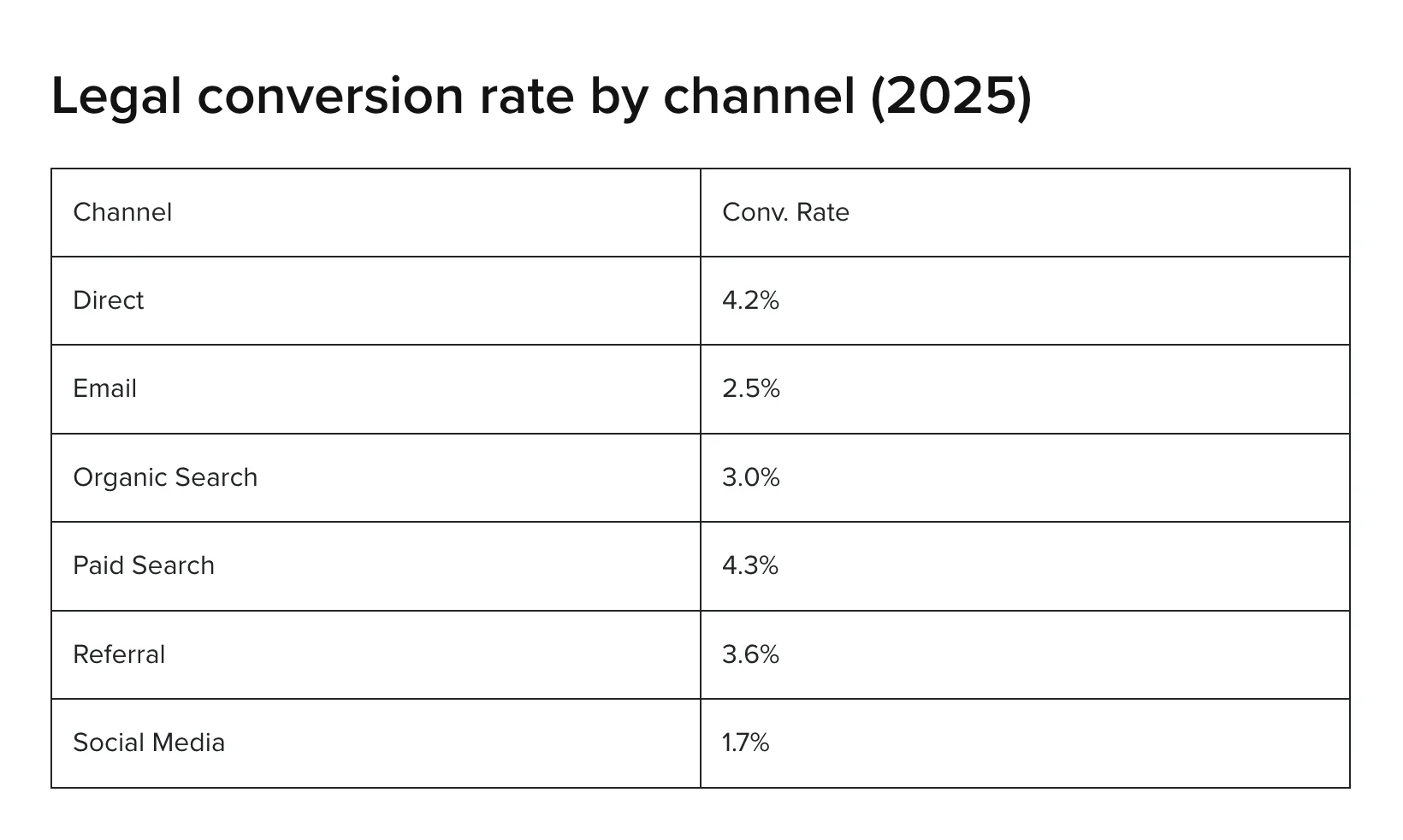
- Legal referral traffic converted at 8.8% in Ruler Analytics’ legal marketing data. Signed-case intent is not evenly distributed by channel; some traffic sources bring fewer visitors but better prospects. ( Ruler Analytics, May 2026 )
- Search Console gives firms direct visibility into clicks, impressions, average position and query-level performance. Rankings are useful, but first-party Search Console data is the cleaner place to start when connecting organic visibility to consultations. ( Google, June 2026 )
- Local ranking is shaped by relevance, distance and prominence. For law firms, that connects organic content, Google Business Profile strength, reviews and location signals into one local visibility system. ( Google, June 2026 )
SEO Timelines and Practice Area Performance
- Law firm SEO timelines should be treated as market-specific, not universal. Practice area, geography, site authority, technical health, local competition and intake tracking all change how quickly organic visibility becomes qualified demand. ( Google, June 2026 )
- Legal referral traffic converted at 8.8% in Ruler Analytics’ legal marketing data, while the legal sector’s average overall conversion rate was 7.9%. Practice-area SEO performance should be judged by qualified demand and conversion quality, not only by ranking timelines or traffic growth. ( Ruler Analytics, May 2026 )
- Search Essentials focuses on helping Google find, crawl, index and understand content. In practice, law firm SEO timelines depend on technical access, site quality, content depth, local competition, authority and intake measurement, not one universal “first-page” timeline. ( Google, June 2026 )
- Keyword Planner helps advertisers discover keyword ideas, search volume estimates and campaign forecasts. It is paid-search tooling, but it can still help SEO teams compare demand across practice areas when paired with Search Console, Google Trends and first-party consultation data. ( Google, June 2026 )
AI Discovery and GEO Data
- Only 38% of URLs cited in Google AI Overviews also ranked in the top 10 organic results in Ahrefs’ analysis of 863,000 SERPs and 4 million AI Overview URLs. AI discovery and classic organic visibility now overlap, but they are not twins. ( Ahrefs, March 2026 )
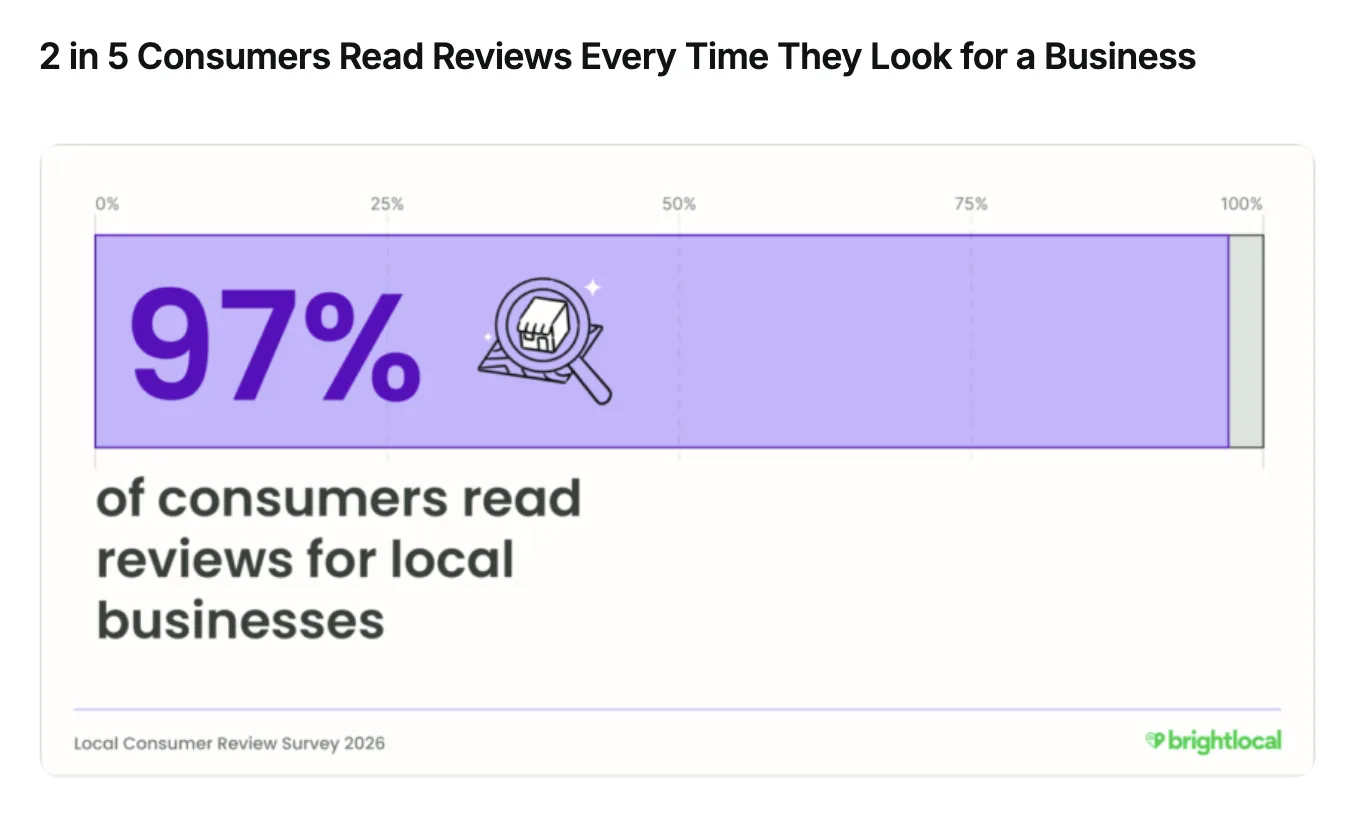
- 40% of consumers trust AI platforms to provide business recommendations, according to BrightLocal’s 2026 consumer review research. Local discovery is no longer just a search bar, map pack and review page. AI tools are moving into the recommendation layer. ( BrightLocal, February 2026 )
- Site owners can manage visibility in AI Overviews and AI Mode through existing Search controls, according to Google’s AI features documentation. That keeps AI visibility tied to technical SEO fundamentals, indexability and content quality. ( Google, June 2026 )
- 82% of consumers read AI-generated review summaries, and 23% are willing to rely only on those summaries to make a decision. Review quality now has to work for humans and the AI systems summarizing what humans said. ( BrightLocal, February 2026 )
- Google announced Search Console reporting for generative AI search features, including AI Overviews and AI Mode. That makes AI search measurement a more official part of SEO reporting instead of a total black box. ( Google, June 2026 )
Law Firm PPC Advertising and Cost Per Lead Economics
Paid search gives law firms speed, and speed is expensive. A firm can buy visibility almost immediately, but every click needs to be judged against lead quality, intake speed and signed-case value. Raw CPL is useful, but it does not tell the whole story. A cheap lead that never answers the phone is still expensive. A costly lead that becomes a high-value case can be more efficient when it converts.
Legal CPC and CPL Data
- Attorneys and legal services had an average Google and Microsoft Ads cost per click of $9.87 in 2026. That gives law firms a current benchmark for how expensive legal paid search attention has become. ( WordStream, May 2026 )
- Legal services generate 56.3% of conversions through phone calls. Paid search measurement that ignores phone quality is missing the legal funnel’s loudest signal. ( Ruler Analytics, May 2026 )
- Attorneys and legal services had the highest average cost per lead among industries tracked by WordStream in 2026 at $131.63. When legal leads cost that much, missed calls and weak landing pages are not small problems. ( WordStream, May 2026 )
- Law firms are planning around AI, new channels and faster intake in 2026. Paid traffic only works if the firm can respond quickly enough to turn demand into a consultation. ( CallRail, 2026 )
CPL vs Qualified Lead Cost
- A $131.63 average CPL for attorneys and legal services is not the same as cost per qualified lead, consultation or signed case. Platform CPL is the start of the math, not the end. ( WordStream, May 2026 )
- Legal referral traffic converted at 8.8%, the highest converting channel in Ruler Analytics’ legal marketing data. Lead quality changes by source, so firms should not grade every channel on volume alone. ( Ruler Analytics, May 2026 )
- Only 40% of law firms answered the phone in Clio’s intake study. A paid campaign can look fine inside Google Ads and still fail in the real world if the call goes unanswered. ( Clio, 2024 )
- CallRail’s legal marketing research puts source attribution, phone calls and intake behavior in the same conversation. That is the right frame for law firms: qualified lead cost has to include what happens after the click. ( CallRail, 2026 )
- Among firms reached by phone, only 41% provided rate information and only 36% explained next steps. That makes intake quality part of acquisition cost, not a separate customer service issue. ( Clio, 2024 )
Landing Page Conversion Standards
- Google Ads conversion tracking supports website actions, phone calls and local actions. For law firms, landing pages should be judged by consultation intent, calls, qualified forms and signed cases, not just page views. ( Google, June 2026 )
- Only 33% of law firms responded to email inquiries in Clio’s intake research. Landing page conversion does not end at the form submission; the follow-up has to work too. ( Clio, 2024 )
- Since legal services generate 56.3% of conversions through phone calls, click-to-call visibility, mobile usability and phone routing belong inside landing page strategy. ( Ruler Analytics, May 2026 )
- Local conversion actions can measure engagement such as calls, direction requests and website visits. This helps firms connect paid local visibility to real client behavior. ( Google, June 2026 )
Local SEO and Google Business Profile Statistics for Law Firms
For many law firms, local search is the real front door. A person searching from a phone is not only comparing websites. They are looking at proximity, reviews, business hours, map placement and the fastest way to call. That makes Google Business Profile more than a listing. It is a conversion surface.
The strongest local marketing systems are usually practical. The firm has the right primary category, clean contact information, strong reviews, current photos, clear services and a fast path from map result to phone call.
Local 3-Pack and Mobile Call Data
- Google Business Profile signals remain a major local pack ranking factor group in Whitespark’s 2026 local ranking research. Profile completeness, category relevance and local trust signals are still doing heavy lifting. ( Whitespark, November 2025 )
- Google says local results are based primarily on relevance, distance and prominence. That is the local SEO triangle law firms keep running into: what you do, where you are and how trusted you look. ( Google, June 2026 )
- Legal services generate 56.3% of conversions through phone calls, making mobile click-to-call behavior central to local SEO performance. ( Ruler Analytics, May 2026 )
- Consumers now use traditional search, maps, social platforms and AI tools to find local businesses. Local discovery is fragmented, so law firm trust signals need to travel across more than one surface. ( BrightLocal, February 2026 )
- Google Business Profile performance reporting can show calls, messages, bookings and website clicks depending on setup. Local SEO should be tied to customer actions, not just map-pack screenshots. ( Google, June 2026 )
Google Business Profile Actions
- GBP performance reporting can show profile-driven actions such as calls, website clicks, messages and bookings. For law firms, those actions are closer to business value than impressions alone. ( Google, June 2026 )
- Phone calls dominate legal conversion behavior, with legal services generating 56.3% of conversions through calls. GBP calls should be treated as a priority conversion path, not a miscellaneous profile metric. ( Ruler Analytics, May 2026 )
- Consumers now use maps, traditional search, social platforms and AI tools to discover local businesses. That makes Business Profile actions part of a wider local trust journey, not just a Google-only reporting line. ( BrightLocal, February 2026 )
- Google Ads local actions can measure calls, direction requests and website visits tied to local ad engagement. That gives firms another way to connect paid visibility with local intent. ( Google, June 2026 )
Review Trust and Legal Consumer Behavior
- Reviews remain central to how consumers evaluate local businesses. For law firms, that means reputation is not a brand layer sitting outside SEO; it is part of discovery and conversion. ( BrightLocal, February 2026 )
- 86% of legal consumers use online resources and 70% review online content before hiring an attorney, according to Martindale-Avvo. Legal hiring is already an online research process before the first call happens. ( Martindale-Avvo, December 2023 )
- 42% of consumers trust AI platforms as much as traditional reviews for local business recommendations. Reputation content is no longer only read directly; it can also be summarized and reframed by AI tools. ( BrightLocal, February 2026 )
- Review recency, review volume and review content appear among Whitespark’s local ranking and conversion considerations. Fresh, specific client feedback can influence both visibility and trust. ( Whitespark, November 2025 )
- 82% of consumers read AI-generated review summaries, and 23% are willing to rely solely on those summaries to make a decision. That raises the stakes for review quality, detail and sentiment. ( BrightLocal, February 2026 )
Law Firm Website Performance and Conversion Statistics
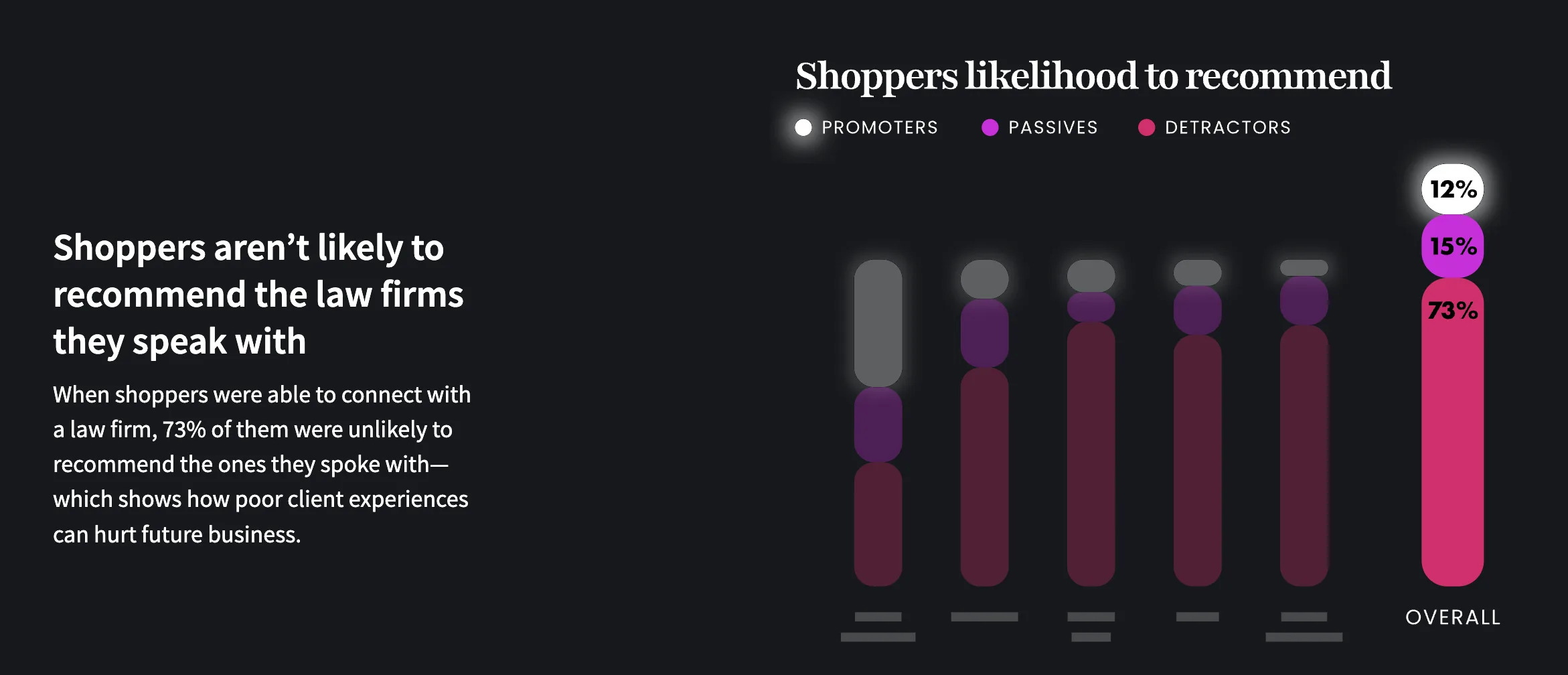
A law firm website can look polished and still leak leads. Speed, mobile usability, click-to-call visibility, forms, intake routing and response time all affect how much marketing traffic becomes signed business.
This section is important because legal prospects are often stressed, time-sensitive and comparing options quickly. If the phone number is hard to find, the page loads slowly, the form feels heavy or nobody responds, the firm can lose the lead after already paying to win the visit.
Website Conversion and Intake Data
- Legal services generate 56.3% of conversions through phone calls, the highest phone-call share among industries tracked by Ruler Analytics. A law firm website should make calling obvious, fast and trackable. ( Ruler Analytics, May 2026 )
- Only 40% of law firms answered the phone in Clio’s intake research, while 48% were unreachable even after giving firms the chance to respond to messages. Website traffic has no value if the next step fails. ( Clio, 2024 )
- CallRail’s 2026 outlook links legal marketing performance with intake speed and channel strategy. A website should not be judged in isolation from calls, forms, routing and follow-up. ( CallRail, 2026 )
- Of the firms reached by phone, only 41% offered rate information and only 36% explained next steps. Conversion depends on clarity, not just availability. ( Clio, 2024 )
Core Web Vitals and Booking Friction
- Good Core Web Vitals thresholds are LCP within 2.5 seconds, INP under 200 milliseconds and CLS below 0.1, according to Google. Those are technical numbers, but they show up as human friction when a stressed client is trying to contact a firm fast. ( Google, June 2026 )
- Interaction to Next Paint became a Core Web Vital on March 12, 2024, replacing First Input Delay as Google’s responsiveness metric. Any 2026 website performance discussion should use INP, not old FID language. ( web.dev, March 2024 )
- Search Console includes a Core Web Vitals report based on real-world usage data. That helps firms monitor field performance instead of relying only on lab tests or one-off speed scores. ( Google, June 2026 )
- Page experience documentation connects technical performance with user experience signals. For law firms, that means speed and stability are not “developer details”; they affect trust and next-step completion. ( Google, June 2026 )
Click-to-Call and Instant Response
- Legal services generate 56.3% of conversions through phone calls. Phone-first conversion is not old-school; it is still the center of legal demand capture. ( Ruler Analytics, May 2026 )
- Nearly half of law firms were unreachable by phone in Clio’s intake research. A missed call is not just an operations miss. It is paid demand walking out the door. ( Clio, 2024 )
- Intake challenges are a central theme in CallRail’s 2026 law firm marketing outlook. The firms improving response speed have a better shot at turning traffic into signed cases. ( CallRail, 2026 )
- Google Ads can track phone calls from ads, websites and mobile click-to-call actions. Firms should not treat phone leads as invisible offline events. ( Google, June 2026 )
Legal Marketing ROI and Business Impact Statistics
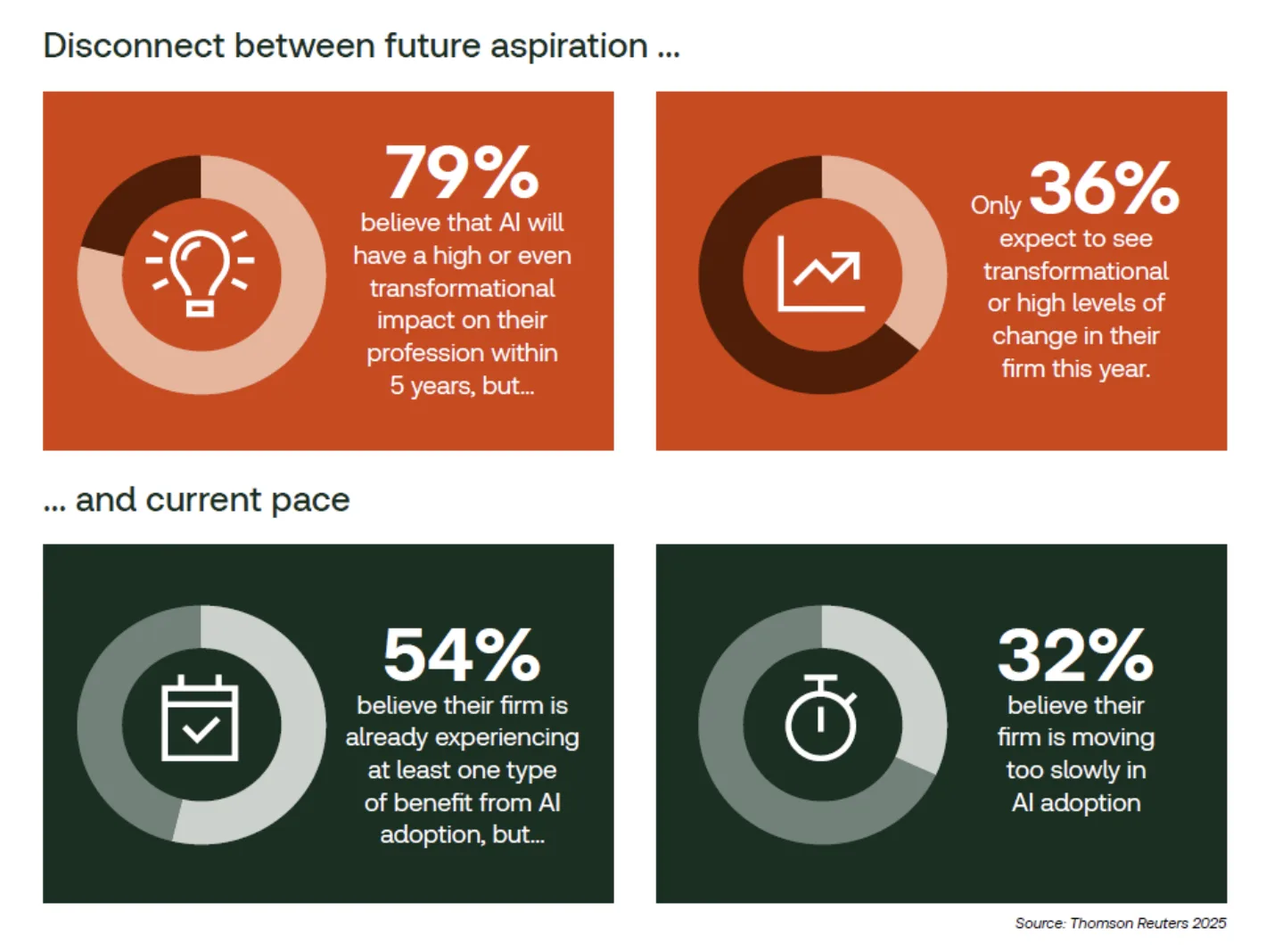
The strongest marketing systems usually combine multiple channels and measure them against signed cases instead of vanity traffic. That means tracking source quality, lead qualification, call handling, consultation booking, cost per signed case and revenue impact.
SEO, PPC, referrals, local visibility and AI discovery do not play the same role. PPC creates speed. SEO creates compounding visibility. Local search captures immediate intent. Reviews build trust. Intake determines how much of that demand turns into revenue.
Multi-Touch ROI by Channel
- Legal referral traffic converted at 8.8% in Ruler Analytics’ legal marketing data. Referral traffic may not always be the biggest channel, but it can be one of the strongest when trust is already built in. ( Ruler Analytics, May 2026 )
- Attorneys and legal services had an average paid search cost per lead of $131.63 in 2026. That gives firms a current benchmark for how quickly paid acquisition costs can climb. ( WordStream, May 2026 )
- Senior legal marketing and business development leaders are evaluating AI, management, client acquisition and business development strategy in the LMA and Above the Law research. Legal marketing leadership is becoming more strategic and more technology-connected. ( LMA/Above the Law, June 2025 )
- Professionals expect AI to create major time savings, with five hours per week often cited as the expected productivity impact. AI ROI is increasingly about operational capacity, not just content output. ( Thomson Reuters, 2025 )
- Google Analytics can track acquisition, engagement and conversion events across traffic sources, giving firms a measurement layer for comparing paid search, organic search, referral traffic and local campaigns. For law firms, that data becomes more useful when it is tied to intake records and signed-case reporting. ( Google, June 2026 )
Client Acquisition Cost by Channel
- Attorneys and legal services had the highest average cost per lead among industries tracked by WordStream in 2026, at $131.63. Legal lead generation is expensive enough that firms cannot afford sloppy follow-up. ( WordStream, May 2026 )
- The 2026 average CPC for attorneys and legal services was $9.87, with an average conversion rate of 3.1%. CPC without conversion rate is trivia; together, they start to show acquisition economics. ( WordStream, May 2026 )
- Legal referral traffic converted at 8.8% in Ruler Analytics’ data. Some channels may produce fewer leads but stronger lead quality, which is why source-level tracking counts. ( Ruler Analytics, May 2026 )
- CallRail’s legal marketing research emphasizes calls, attribution and intake speed. Firms need full-funnel data to calculate acquisition cost honestly, not just ad-platform metrics. ( CallRail, 2026 )
Seasonal Legal Search Demand
- Legal referral traffic converted at 8.8%, organic search converted at 7.3%, and paid search converted at 7.8% in Ruler Analytics’ legal marketing data. Those channel differences count when firms compare seasonal traffic spikes because more demand is only useful if it turns into qualified consultations. ( Ruler Analytics, May 2026 )
- Legal services generate 56.3% of conversions through phone calls, which means seasonal demand should be measured through call volume, call quality and booked consultations, not only search interest or impressions. ( Ruler Analytics, May 2026 )
- CallRail’s 2026 law firm marketing outlook says legal marketing is shaped by expanded AI adoption and intake challenges, based on a survey of U.S. law firms. That is useful seasonal context because demand spikes can expose weak intake systems fast. ( CallRail, 2026 )
- Clio’s intake research found that only 40% of law firms answered the phone, while 48% were unreachable by phone even after prospects could leave messages. During seasonal demand peaks, missed calls become more expensive because the firm may already be paying more to win that traffic. ( Clio, 2024 )
- Google Business Profile performance reporting can show local actions such as calls, website clicks and messages depending on setup. For seasonal local demand, those actions are more useful than impressions because they show how many people moved from discovery to intent. ( Google, June 2026 )
Legal Advertising Ethics and Bar Compliance
Attorney advertising has a constraint most industries do not have: a campaign can perform well and still create risk if the language, claims, testimonials, guarantees, comparisons or solicitations do not comply with the relevant rules.
This section is included because law firm marketing must be reviewed through a compliance lens. The ABA Model Rules are the framework; state bar rules are the operating reality. Firms should review attorney advertising by jurisdiction before publishing claims, testimonials, guarantees, comparison language or solicitation campaigns.
Attorney Advertising and Compliance Sources
- ABA Model Rule 7.1 prohibits false or misleading communications about a lawyer or the lawyer’s services. That is the baseline for legal marketing claims: no misleading guarantees, no distorted comparisons and no omissions that create the wrong impression. ( ABA, June 2026 )
- ABA Formal Opinion 501 explains lawyer responsibility around solicitation and live person-to-person contact, including conduct done through others. Vendors, referral partners and intake teams can create ethics risk if their conduct crosses the line. ( ABA, April 2022 )
- California Rule 7.1 prohibits false or misleading communications and treats guarantees or warranties of a particular result as misleading. Outcome claims, comparison claims and testimonial language need careful review before publication. ( California State Bar, June 2026 )
How Three Stripes Digital Helps Law Firms Turn Data Into Growth
Three Stripes Digital helps law firms connect the parts many agencies treat separately: search visibility, paid acquisition, local presence, website performance and intake data. The point is not to chase every shiny channel. The point is to find where growth is breaking and fix the system around it.
That can mean stronger local visibility, cleaner paid search measurement, faster website performance, better legal content, AI-ready authority signals, stronger review strategy or intake workflows that stop qualified leads from disappearing. When those pieces work together, firms can stop guessing which channels are working and start improving the path from search to signed case.
Want to see where your firm is losing qualified leads? Start with Three Stripes Digital’s legal marketing services and build a growth system that connects search visibility, paid traffic, local trust and intake performance.
Methodology and Source Standards
This report prioritizes primary, native and original sources from 2023 to 2026. Older materials are used only where they are foundational legal advertising ethics sources, such as ABA Model Rules and formal ethics guidance. For living documentation pages from Google, ABA, state bars and similar publishers, the citation month reflects the latest access and review date used for this article.
The report avoids direct law-firm marketing agency competitor sources. Vendor-owned datasets are used only when the publisher owns the original data and is not positioned as a direct law firm SEO, PPC, web design or legal marketing agency competitor to Three Stripes Digital. Commercial platform data is used selectively when it provides original benchmarks, native platform documentation or legal-industry research that cannot be replaced by a neutral public source.
Legal market, labor and economic data: American Bar Association Profile of the Legal Profession; FRED and the U.S. Bureau of Economic Analysis legal services GDP data; U.S. Bureau of Labor Statistics Lawyers Occupational Outlook Handbook; U.S. Bureau of Labor Statistics Legal Occupations overview. ( ABA, 2025 ) ( FRED/BEA, September 2025 ) ( BLS, August 2025 ) ( BLS, August 2025 )
Legal technology, AI, intake and law firm operations: Clio Legal Trends materials; Clio client intake research; Clio consumer AI research; Thomson Reuters Future of Professionals; CallRail’s 2026 law firm marketing outlook. ( Clio, October 2024 ) ( Clio, 2024 ) ( Clio, January 2026 ) ( Thomson Reuters, 2025 ) ( CallRail, 2026 )
Marketing budget, website adoption and legal marketing leadership: ABA 2024 Websites and Marketing TechReport; ABA 2023 Websites and Marketing TechReport; Legal Marketing Association and Above the Law decision-maker research; Gartner CMO Spend Survey. ( ABA, April 2025 ) ( ABA, January 2024 ) ( LMA/Above the Law, June 2025 ) ( Gartner, May 2025 )
Paid search, conversion and attribution data: WordStream 2026 Google Ads benchmarks; Ruler Analytics conversion benchmarks; Ruler Analytics legal marketing statistics; CallRail’s law firm marketing outlook and PDF. ( WordStream, May 2026 ) ( Ruler Analytics, May 2026 ) ( Ruler Analytics, May 2026 ) ( CallRail, 2026 )
SEO, AI discovery and search measurement: Ahrefs AI Overview citation research; Google helpful content documentation; Google Search Essentials; Google AI features documentation; Google Search Console performance documentation; Google Search Console AI Mode update. ( Ahrefs, March 2026 ) ( Google, June 2026 ) ( Google, June 2026 ) ( Google, June 2026 ) ( Google, June 2026 ) ( Google, June 2026 )
Local SEO, reviews and legal consumer behavior: BrightLocal Local Consumer Review Survey; Whitespark Local Search Ranking Factors; Google Business Profile local ranking documentation; Google Business Profile performance documentation; Martindale-Avvo legal consumer research. ( BrightLocal, February 2026 ) ( Whitespark, November 2025 ) ( Google, June 2026 ) ( Google, June 2026 ) ( Martindale-Avvo, December 2023 )
Website performance, analytics and demand planning: Google Ads conversion tracking; Google Ads local actions; Google Ads call conversion tracking; Google Ads Keyword Planner; Google Trends; Google Analytics; Google Core Web Vitals; web.dev INP guidance; Search Console Core Web Vitals report; Google page experience documentation. ( Google, June 2026 ) ( Google, June 2026 ) ( Google, June 2026 ) ( Google, June 2026 ) ( Google, June 2026 ) ( Google, June 2026 ) ( Google, June 2026 ) ( web.dev, March 2024 ) ( Google, June 2026 ) ( Google, June 2026 )
Legal advertising ethics and bar compliance: ABA Model Rule 7.1; ABA Model Rule 7.3; ABA Formal Opinion 501; Florida Bar digital advertising guidance; California State Bar professional conduct rules. ( ABA, June 2026 ) ( ABA, June 2026 ) ( ABA, April 2022 ) ( Florida Bar, June 2026 ) ( California State Bar, June 2026 )
Final Notes
Law firm marketing is strongest when public data, platform data and first-party firm data are used together. Public reports can show market direction, paid search costs, local ranking factors, AI search shifts and intake patterns. First-party data is still needed to calculate practice-area CPC, cost per qualified lead, cost per signed case and landing page performance by market.
For law firms, the point is to build a system where visibility, trust, response speed and measurement work together. That is where marketing becomes a growth asset and a justified long-term investment.
More at Three Stripes Digital