
The short answer: use milestones, not a ranking deadline
There is no reliable date on which every website starts ranking. Some technical changes can be discovered quickly, while competitive visibility and a steady flow of customers can take much longer. A sensible plan explains what will be delivered, what evidence should change and when to review the next decision.
Google notes that the effects of changes can take different amounts of time to appear. Its SEO Starter Guide is a useful reference. A fixed promise to rank by a particular month is not a substitute for examining your website.
The first link in the chain is mechanical. Google’s instructions for asking it to recrawl a URL describe what has to happen before anything you changed can count: the page is fetched again, processed again, and only then compared against everything else serving that search.
What changes the SEO timeline?
- Starting condition: can important pages be found, crawled and understood?
- Competition: how useful and established are the pages already serving the search?
- Content fit: do you have a credible page for the exact service, product or question?
- Implementation: how quickly can your team publish, approve and fix what matters?
- Commercial fit: will the searches bring relevant inquiries or purchases?
An established site with useful pages and a small technical problem has a different starting point from a new business entering a competitive market. Treating them as the same project produces an unreliable forecast.
Two widely read industry guides set the same expectation in months rather than weeks: Orbit Media’s write-up on how long SEO takes and Search Engine Land’s guide to how long SEO takes to work. Read both as market context for the conversation, not as a forecast for your own site.
Market data helps set expectations before the work starts. Our 2026 law firm marketing statistics report collects the published cost, conversion and local-search benchmarks we use when a legal client asks how long a competitive practice area takes.
A month-by-month view of the first year
- Weeks 1–4Baseline and blockersRecord today’s indexed pages, non-branded impressions and conversions. Fix crawling, indexing, redirects and broken tracking before anything else is judged.
- Months 2–4Foundations and priority pagesRebuild the service and location pages that already receive relevant impressions. Expect movement in impressions and page engagement, not in revenue.
- Months 4–7Relevance and coveragePublish for the questions customers actually ask. Watch which queries a page starts to serve and whether visitors continue to a next step.
- Months 7–12Compounding outcomesJudge the work on qualified inquiries, appointments or purchases. By now a flat inquiry line with rising traffic is a conversion problem, not a patience problem.
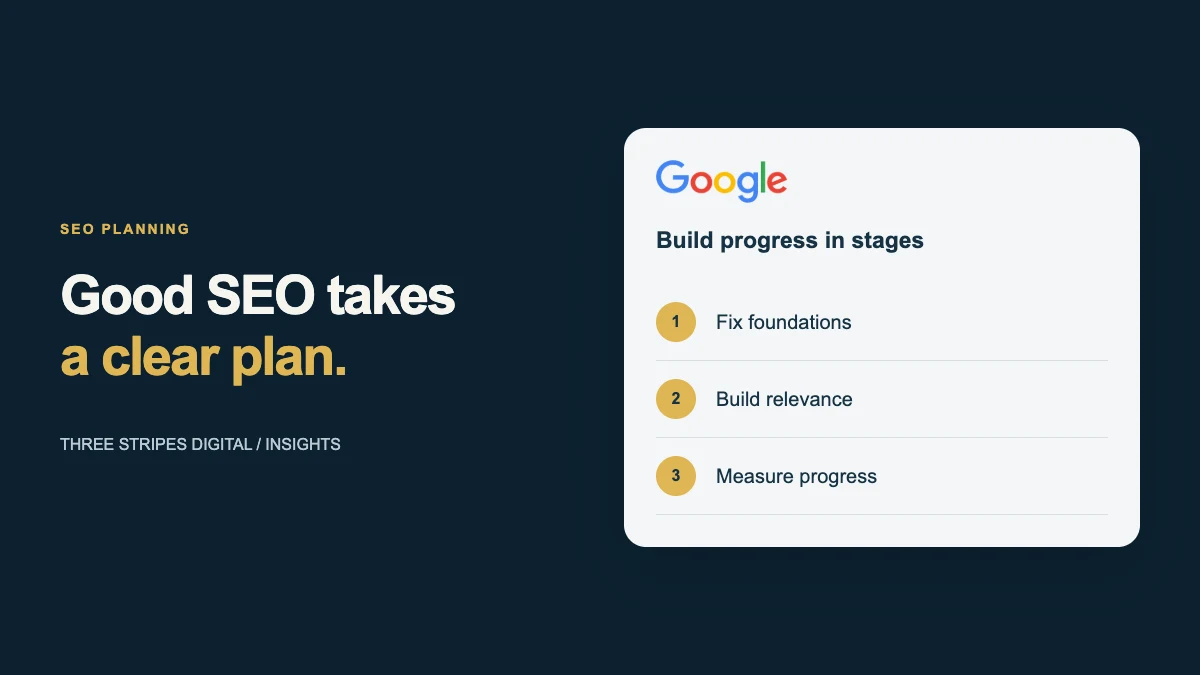
These are the same four stages the summary at the top of this page names. They are review points for a typical small-business engagement, not a promise that a particular ranking will exist by a particular date. A competitive national market can take considerably longer; a neglected local site can move sooner.
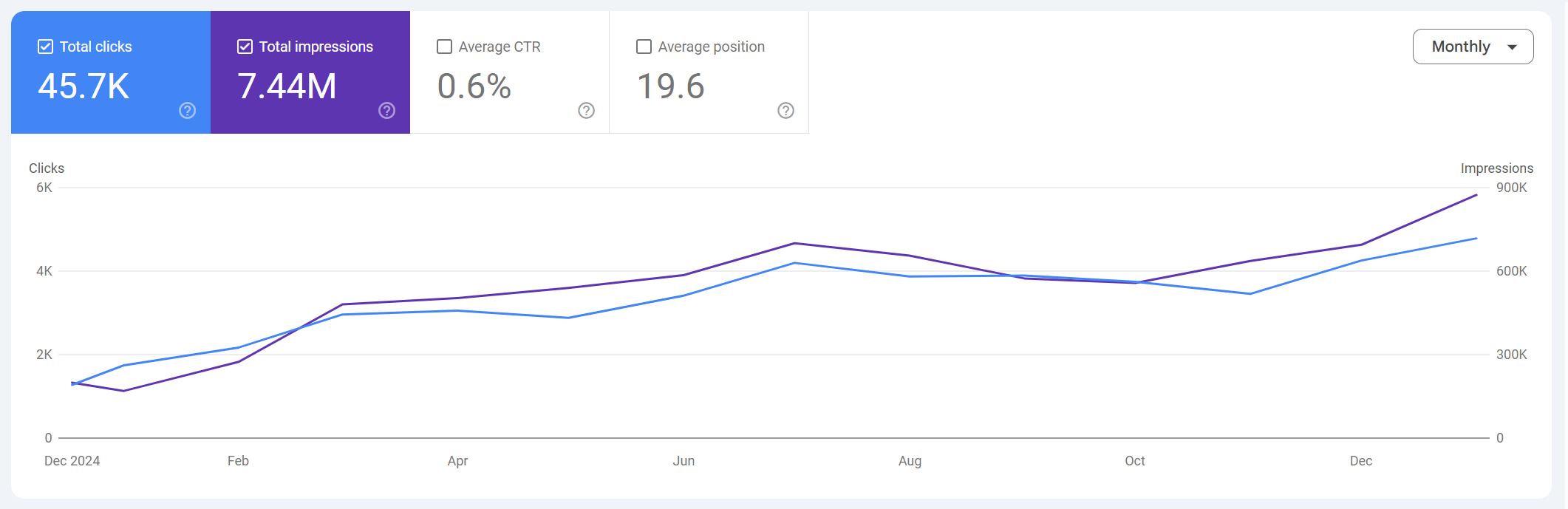
At each review, distinguish work completed from outcomes observed. Publishing a page is a delivery milestone. An increase in relevant impressions is a visibility signal. A qualified inquiry or purchase is a business result. Keeping those separate makes reporting useful even before rankings move.
New websites and existing websites need different plans
For a new site, start with a coherent set of useful pages, working contact or purchase paths and clear business information. Avoid launching dozens of thin location or topic pages simply to make the site look large. Each page needs a distinct job for the visitor.
For an existing site, identify the pages and URLs already earning relevant visits before changing them. Preserve valuable content, map necessary redirects and check that tracking still works after the release. A redesign can help conversion, but unnecessary URL changes add migration work.
| Starting point | First priority | Evidence to watch |
|---|---|---|
| New site | Clear pages and discoverability | Important pages being found and relevant searches emerging |
| Existing site | Protect useful assets and fix gaps | Performance of retained pages and improved customer journeys |
| Local business | Accurate location and service information | Visibility across the service area and relevant contacts |
Which signals should improve first?
Use the signals that match the work. After a crawlability fix, confirm that the affected pages are accessible. After a content improvement, watch the relevant queries and page engagement. After a conversion change, check whether people can complete the intended action.
A ranking increase for the wrong query is not a meaningful win. Compare branded and non-branded searches, relevant markets and the quality of resulting inquiries. For ecommerce, connect the landing pages to purchases and product economics.
If a share of your customers now start in an assistant rather than a search box, the same timeline question applies to AI answers. We work through that separately in our guide to ChatGPT SEO.
When should you question the plan?
- No clear record of what changed or why.
- Reports that show only traffic without useful query or page context.
- Broken forms, missing pages or untested migrations.
- A growing set of articles with little connection to the business.
- Guaranteed ranking dates without evidence about the market.
Ask for the current constraint and the next test that could resolve it. A good review should lead to a concrete decision, not another month of the same unexplained activity.
If two consecutive reviews cannot tell you what changed, what it was meant to move and whether it moved, treat that as the answer. Ask for the raw report behind the summary, agree one measurable decision for the next month, and re-scope the work rather than renew it unchanged.
A FEW THINGS YOU MAY BE WONDERING
Good questions. Clear answers.
Why can rankings improve before inquiries?
A higher position only produces contacts when the page matches what the searcher wanted and makes the next step easy. Visibility moves first; conversion depends on the page, the offer and the competition.
How does a new website change expectations?
A new domain has no history, so discovery and indexing come first and the early months can look like nothing is happening. An established site with existing authority usually moves sooner.
When should we reassess an SEO plan?
At the milestone dates agreed at the start, and immediately if indexing, intent or conversion checks show the plan is aimed at the wrong thing. Waiting twelve months to find out wastes a year.
Is there an 80/20 rule in SEO?
Roughly. A small number of pages and a handful of technical problems usually explain most of the result, and finding those before writing anything new separates progress from busywork.