
Start with the cases and markets you want
Define the practice areas, locations and case criteria that matter to the firm. A family-law search in one city and a statewide immigration question may need different pages and different evidence. Begin with a manageable set of priorities the intake team can recognize.
Review the actual results for those searches. Note what visitors can compare: firm names, reviews, locations, practice descriptions and website pages. The next step is to improve the information a prospective client needs, not copy every competitor’s wording.
Build an accurate local presence
Google describes relevance, distance and prominence as major considerations in its Business Profile help on improving local ranking. Distance is one reason a single search from one address is not an adequate picture of an entire market.
- Keep eligible Business Profile information accurate and current.
- Use the categories and services that genuinely describe the firm.
- Make contact details and office information consistent.
- Give each legitimate office a useful location page.
- Check that a prospective client can call or request a consultation on mobile.
State the same details on the website itself in Google’s LocalBusiness structured data, so the name, address, opening hours and practice description a machine reads are the ones a visitor sees.
What you can change, and what you cannot
| What Google weighs | What that means for a firm | What the firm can change this quarter |
|---|---|---|
| Relevance | How well the profile and pages match what was searched | Categories, practice-area services, a real page for each matter type the firm wants |
| Distance | How far the searcher is from the office | Nothing directly — but an office that genuinely serves a second market can earn its own profile and location page |
| Prominence | How well known and well referenced the firm is | Genuine reviews, accurate professional profiles, coverage and links that a person would actually cite |
Two of the three are work. The third is geography, which is why one search from one address tells you very little about a market.
Whitespark’s annual Local Search Ranking Factors survey collects practitioner opinion on how those considerations are weighted. Read it as market context rather than as a formula: it records what experienced local SEOs believe, not what Google published.
Support those pages with clear internal links and relevant explanations. Avoid near-identical pages for every nearby town unless each page serves a distinct, useful purpose.
Create practice pages that answer hiring questions
A practice page has one job: help someone decide whether to call this firm about this matter. Write it to answer the questions a prospective client asks before they are willing to.
- Does the firm handle my kind of matter, in plain words rather than statute names?
- Who would I be dealing with, and what have they actually done?
- What happens after I make contact, and how quickly?
- What will it cost me, or how are fees worked out?
- Where is the firm, and can it act where my matter is?
Keep the answers short and specific. Have the firm review substantive legal statements and any client reference before publication.
For planning the work and setting realistic expectations, see how long SEO takes.
Read ranking grids with their context intact
A grid scan puts the same search at many points across a market and records the firm’s position at each one. One scan is a snapshot. A pair of scans of the same grid, shown together, is the only version of this evidence worth reading.
Before the campaign
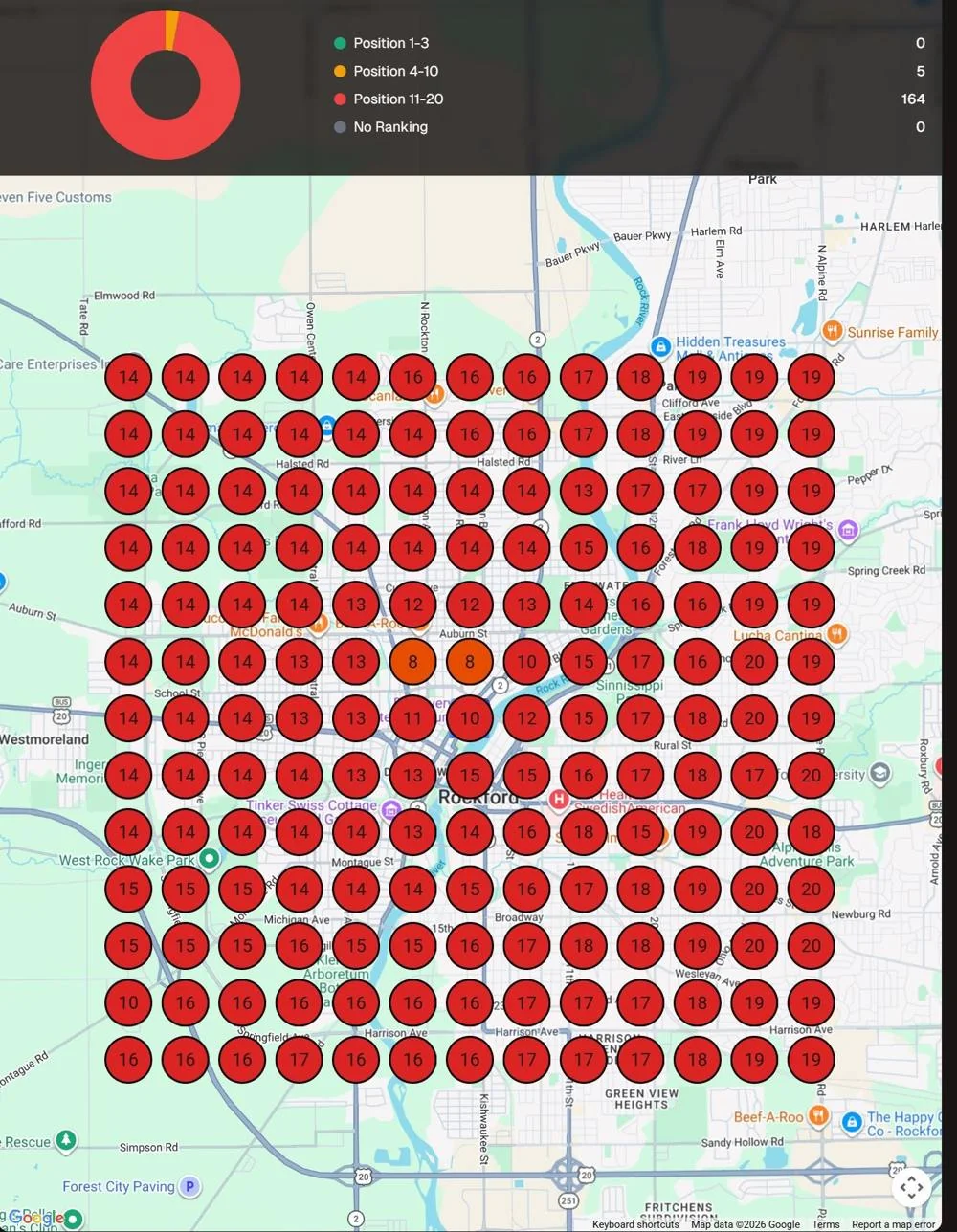
0 of 169 scanned locations in the top three
Open the full-size scan, before the campaign ↗After the campaign
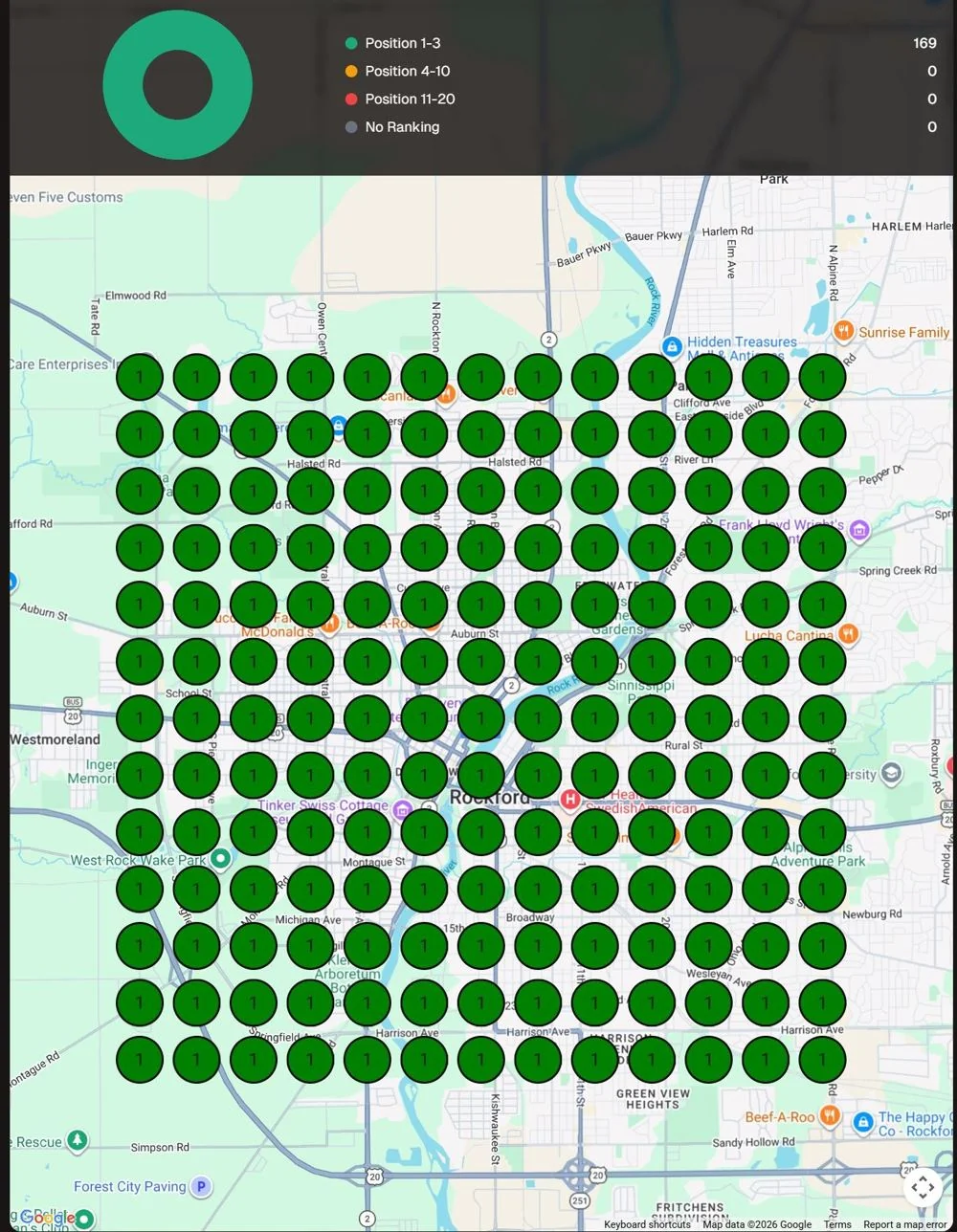
169 of 169 scanned locations at position 1
Open the full-size scan, after the campaign ↗Compare the same scan setup where possible — same term, same grid, same radius — and inspect changes across the whole area instead of selecting one favorable point. A grid that improves only at the office and nowhere else is a different result from this one.
Create a consistent process for appropriate, genuine review requests and helpful responses. Do not manufacture reviews or turn the process into a way to collect only favorable feedback. Published consumer research such as BrightLocal’s Local Consumer Review Survey is a reasonable outside reference for how prospective clients read reviews; coordinate any response involving a client relationship with the firm’s reviewer.
Measure through intake, not just traffic
Separate inquiries, qualified consultations and signed retainers in reporting. Define those stages with the firm so the marketing report and the intake team describe the same journey. Also review missed calls, response handling and confusing forms, because discovery only helps when the next step works.
Our local SEO for law firms connects location visibility with practice-area relevance. The Vernsten Law case study includes the actual client video and campaign screenshots so you can inspect the evidence.
A FEW THINGS YOU MAY BE WONDERING
Good questions. Clear answers.
Do lawyers need separate practitioner profiles?
Only where the attorney is publicly reachable at that office and meets the eligibility rules. A practitioner profile is not a second listing for the firm, and misuse can get both suspended.
Can a firm rank outside the city where its office is located?
Organically, yes, with content that genuinely serves that market. In the map pack, distance from the searcher is a real factor, and a virtual address is not a workaround for it.
What does a ranking grid actually measure?
Position for one keyword at a set of geographic points, on one date, at a stated radius. It is a snapshot of local visibility across an area, not traffic, not calls and not a permanent standing.
What should a firm fix first?
Factual errors on the Business Profile: wrong hours, wrong category, wrong address. They cost calls immediately and take an afternoon to correct, unlike content work that takes months to pay off.